Managing waste is part of travelling self-sufficiently, and doing it properly keeps campsites open for everyone.
Black water vs grey water
- Black water: the toilet cassette contents. Empty only at an approved dump point or a park facility signed for cassettes
- Grey water: water from sinks and the shower. Rules vary. Some parks and councils require it to be contained or emptied at a dump point; check local rules
Finding dump points
CMCA maintains a public listing of RV dump points across every state and territory, and says almost 500 public dump points have been installed under the CMCA/KEA subsidy program (CMCA dump points). Caravan parks, council sites and many visitor centres also have facilities. Check signage, as some are for cassettes only.
A simple emptying routine
- Wear disposable gloves
- Close the cassette blade and remove the cassette from its hatch
- Carry or wheel it to the dump point; open the spout and empty it slowly
- Rinse with the non-potable rinse tap, never the drinking-water tap
- Add the right amount of toilet treatment and water, per the product label
- Re-fit the cassette, wash hands, and leave the dump point clean
Good habits
- Use toilet paper suited to cassette toilets
- Keep a separate hose for rinsing, never your drinking-water hose
- Plan dump points on your route before free-camping stretches
- Never empty cassettes into public toilets, drains, bushland or waterways unless signed for that purpose
Free camping and waste
Many free camps have no dump point, and some have no toilets. Before a self-sufficient stay, know how long your cassette and grey-water capacity will last. Our free camping rules by state guide covers where you can stay.
Get the Pack · AUD 7 launch price AUD 9
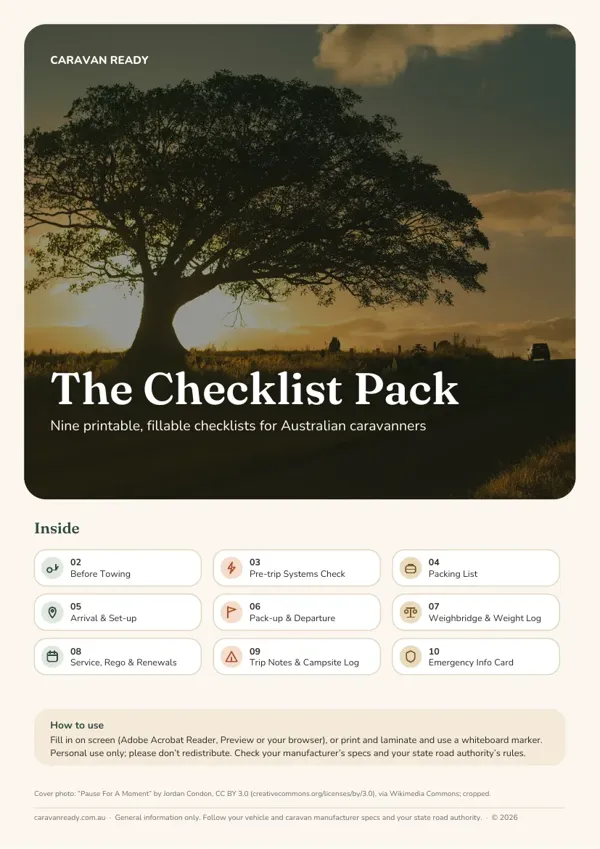
Nine fillable, print-friendly checklists and logs for Australian caravanners: hitch-up, packing, set-up, pack-up, weights, renewals, campsite log and an emergency card.
See what's insideTake it with you
Print the free one-page Before Towing checklist, or get the full fillable Checklist Pack.